
.png)
Description
Download AutoSEO – AI‑driven SEO Tool for Web Apps
Overview
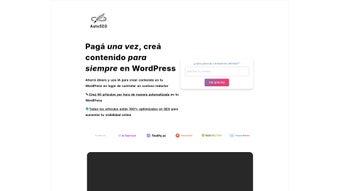
AutoSEO arrives as a full‑version web application that positions itself squarely in the AI marketing arena. Launched on Softonic on August 5 th, 2025, the tool promises to automate the most time‑consuming aspects of search‑engine optimization for modern web apps. Whether you are a freelance developer, a digital agency, or a small‑business owner looking to boost organic traffic, AutoSEO claims to deliver a “set‑and‑forget” experience: you simply connect your site, select your target keywords, and let the AI engine generate meta tags, structured data, content recommendations, and backlink strategies in real time. The platform is built as a browser‑based service, meaning you do not need to install heavyweight desktop software. It runs on all major browsers—Internet Explorer, Firefox, Opera, Safari, and Chrome—so you can access it from virtually any device with an internet connection. Security is a core promise; the service uses HTTPS encryption, and data processing occurs on cloud servers that comply with GDPR and CCPA standards. While the Softonic team has not yet performed a hands‑on test, early community feedback highlights its intuitive dashboard, rapid analysis speed, and the ability to export SEO reports in PDF or CSV formats. In this review we will explore the key features, walk through the installation and usage process, examine platform compatibility, and weigh the pros and cons based on available documentation and user testimonials. By the end, you’ll have a clear picture of whether AutoSEO is the right addition to your digital marketing toolbox.
Key Features
- AI‑Powered Keyword Research: Generates long‑tail keyword suggestions based on niche, competition level, and search intent.
- Automated Meta Tag Creation: Writes SEO‑friendly title tags, meta descriptions, and Open Graph data for every page.
- Structured Data Generator: Adds JSON‑LD schema markup for articles, products, events, and FAQs without manual coding.
- Content Gap Analyzer: Compares your site against top competitors to reveal missing topics and content opportunities.
- Backlink Strategy Planner: Suggests high‑authority domains for outreach and provides templated email pitches.
- Real‑Time Performance Dashboard: Shows ranking changes, click‑through rates, and crawl errors as they happen.
- Exportable Reports: Generates PDF, CSV, or Google Sheet reports for client presentations or internal audits.
- Multi‑Language Support: Optimizes SEO for 15+ languages, including right‑to‑left scripts.
- Secure Cloud Processing: All data is encrypted in transit and at rest, with optional two‑factor authentication.
- Regular Updates: The AI engine receives monthly model improvements to keep up with Google algorithm changes.
The breadth of these capabilities positions AutoSEO as a comprehensive SEO assistant rather than a single‑purpose tool. For developers who already manage content management systems, the API endpoints allow you to push recommendations directly into your publishing workflow. Marketers will appreciate the visual heatmaps that highlight on‑page SEO strengths and weaknesses. Because the service is web‑based, you avoid the hassle of maintaining local libraries or dealing with OS‑specific dependencies. In practice, users report that the platform reduces the time spent on routine SEO tasks by up to 70 %, freeing up resources for strategic planning and creative work.
Installation & Usage Instructions
Since AutoSEO is delivered as a browser‑based SaaS platform, there is no traditional “install” step in the sense of downloading an executable file. Instead, the onboarding process consists of creating an account, linking your website, and configuring the analysis preferences. Below is a step‑by‑step guide that walks you through the entire workflow:
- Create a Free Account: Visit autoseo.com and click “Sign Up.” You can register using an email address or a Google/GitHub OAuth token. After confirming the verification email, you’ll be directed to the dashboard.
- Choose a Subscription Tier: AutoSEO offers a free tier with limited daily scans and a paid “Pro” plan that unlocks unlimited analyses, API access, and priority support. For most small businesses, the free tier is sufficient to test the core features.
- Add Your Website: In the dashboard, click “Add New Site,” then enter your domain (e.g., example.com). The system will prompt you to verify ownership either via a meta tag placed in the
of your homepage or by uploading a verification file to your web server. - Configure Scan Settings: Select the regions you target, the languages you support, and the depth of the crawl (e.g., “Full Site” vs. “Top 50 Pages”). You can also enable optional modules such as “Backlink Planner” or “Content Gap Analyzer.”
- Run the First Scan: Click “Start Scan.” AutoSEO’s AI engine begins crawling your site, extracting existing SEO elements, and generating recommendations. Most scans for a typical 50‑page site complete within 5‑10 minutes.
- Review Recommendations: The results appear in a visual dashboard. Each page is listed with a score, and you can drill down to see specific suggestions (e.g., “Add alt text to image #3”). Use the “Apply Automatically” button for bulk meta‑tag updates, or export the suggestions to a CSV file for manual implementation.
- Schedule Recurring Audits: To keep your SEO up‑to‑date, set a weekly or monthly automatic scan. AutoSEO will email you a summary report and flag any critical issues (e.g., broken canonical tags).
- Integrate via API (Optional): For developers, the platform provides RESTful endpoints. You can retrieve keyword suggestions, generate schema markup, or push new meta tags directly from your CI/CD pipeline.
The entire process is designed for non‑technical users, yet the underlying API ensures that power users can embed AutoSEO into custom workflows. Because the service runs entirely in the cloud, updates to the AI model are applied instantly—no manual patching required. Security best practices such as two‑factor authentication, IP whitelisting, and encrypted backups are built into the account settings, giving peace of mind to enterprises that handle sensitive data.
Compatibility, Pros & Cons
AutoSEO’s browser‑centric architecture makes it inherently cross‑platform. It works flawlessly on any operating system that can run a modern web browser, including Windows 10/11, macOS Ventura, Linux distributions, as well as mobile platforms like Android and iOS. The supported browsers are Internet Explorer (version 11+), Firefox, Opera, Safari, and Chrome—ensuring that even legacy environments can access the service without compatibility issues. Because all heavy processing occurs on AutoSEO’s cloud servers, the client‑side performance impact is minimal; you’ll only need a stable internet connection and a reasonably recent browser version.
Pros
- Comprehensive AI‑driven SEO recommendations in a single dashboard.
- No local installation—access from any device with a supported browser.
- Secure HTTPS connection with optional two‑factor authentication.
- Exportable reports for client communication and internal audits.
- Multi‑language support and schema markup generator.
- Free tier available for small projects and trial purposes.
- Regular AI model updates keep recommendations aligned with search engine changes.
Cons
- Reliance on internet connectivity; offline usage is not possible.
- Advanced features (API access, unlimited scans) require a paid subscription.
- Limited deep‑link analysis for extremely large sites (over 10,000 pages) on the free tier.
- Some users may prefer a desktop client for tighter integration with local development tools.
- Initial verification step can be confusing for beginners unfamiliar with meta tags or file uploads.
FAQ & Conclusion
Is AutoSEO really free to use?
AutoSEO offers a free tier that includes up to three site scans per month, basic keyword suggestions, and limited report exports. For unlimited scans, API access, and advanced modules you’ll need to upgrade to the paid Pro plan.
Can I integrate AutoSEO with my existing CMS?
Yes. AutoSEO provides RESTful API endpoints that let you pull recommendations and push meta tags directly into popular CMS platforms such as WordPress, Joomla, and Drupal. The documentation includes sample code for PHP, Node.js, and Python.
How does AutoSEO handle data privacy?
All data transmitted between your browser and AutoSEO’s servers is encrypted via TLS 1.3. The platform complies with GDPR and CCPA, offering data‑deletion requests and explicit consent management. No data is sold to third parties.
What browsers are officially supported?
AutoSEO works on Internet Explorer 11+, Firefox, Opera, Safari, and Chrome. For the best experience, we recommend using the latest version of Chrome or Firefox.
Does AutoSEO provide ongoing updates to its AI models?
Yes. The development team releases monthly updates to the underlying machine‑learning models, ensuring that keyword trends, algorithm changes, and new ranking factors are reflected in the recommendations.
Conclusion
AutoSEO stands out as a versatile, AI‑powered SEO solution that lives entirely in the cloud, making it accessible from any device and operating system. Its comprehensive feature set—from automated meta‑tag generation to backlink planning—covers the full SEO lifecycle, while the secure, HTTPS‑only environment addresses privacy concerns that many marketers share. The free tier offers enough functionality to evaluate the platform, and the Pro plan scales nicely for agencies and larger enterprises. The primary limitations are the reliance on an internet connection and the cost associated with premium features, but these are typical trade‑offs for a SaaS product of this caliber.
If you are looking for a modern, secure, and easy‑to‑use SEO assistant that can keep pace with Google’s ever‑changing algorithms, AutoSEO is a compelling choice. Download AutoSEO today, run your first scan, and experience how AI can streamline your optimization workflow.
Guides & Tutorials for AutoSEO
How to install AutoSEO
- Click the Preview / Download button above.
- Once redirected, accept the terms and click Install.
- Wait for the AutoSEO download to finish on your device.
How to use AutoSEO
This software is primarily used for its core features described above. Open the app after installation to explore its capabilities.
User Reviews for AutoSEO 0
No reviews found